Dr. Birgit Boss on digital twins, dataspaces and the Bosch Semantic Stack
About Dr. Birgit Boss:
Dr. Birgit Boss is a leading voice in the development and standardization of digital twins. She is a Senior Expert for Digital Twins & Standardization at Robert Bosch GmbH and a Board Member of the Industrial Digital Twin Association (IDTA). She was involved in Catena-X from its very beginning to drive cross-company data exchange.


About Bosch Connected Industry:
Bosch Connected Industry is Bosch’s software and AI house for manufacturing companies. Under the guiding principle of "Manufacturing Co-Intelligence®", the range of services focuses on increasing efficiency through intelligent collaboration between human, machine and agentic AI.
The foundation is the deep industrial production expertise of Bosch combined with leading data and AI expertise. The agent-based AI platform for operational excellence enables scalable value generation based on contextualized data. It combines versatile, industry-grade AI agents with shopfloor software and semantic data management.
Dr. Birgit Boss, as an expert in this field, could you briefly explain what digital twins are and what use cases they serve?
At its core, a digital twin is a living, digital representation of a product, a physical asset, process, or even an entire system. Take Catena-X as an example: we have digital twins not only for complete vehicles but also for their constituent components, such as a gearbox or a battery. These parts, in turn, are often composed of other parts that may each possess their own digital twin. This hierarchical modeling of components is absolutely vital as it enables the profound traceability of use cases that are fundamental to Catena-X.
Crucially, a digital twin is far more than just a 3D model or a simulation of an asset. It serves as the primary point of contact for all information and data required for a specific use case related to that asset.
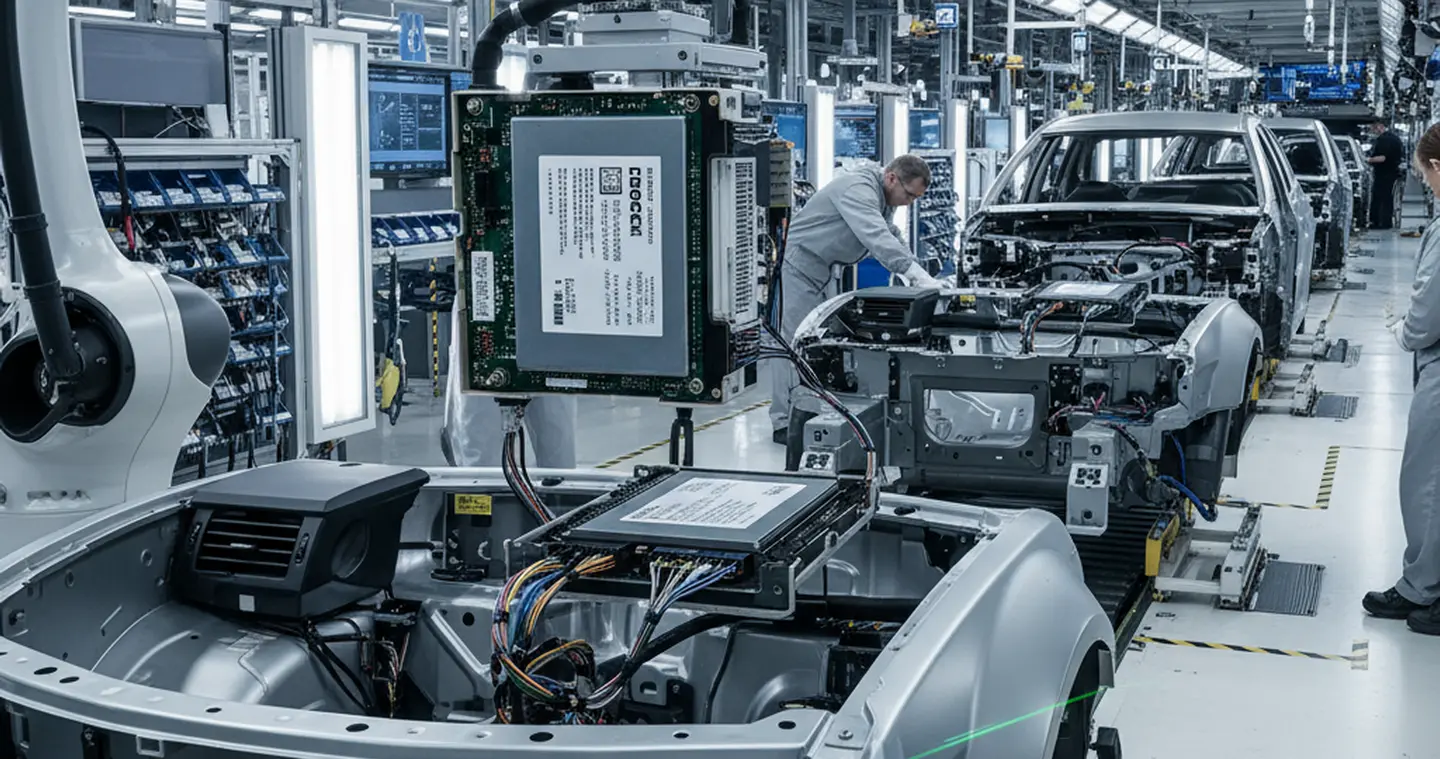
The use cases are incredibly broad and impactful. In manufacturing, digital twins are employed for advanced predictive maintenance, simulating production lines to optimize efficiency, and ensuring stringent quality control. For products, a digital twin can track its entire lifecycle – from initial design through to end-of-life – thereby enabling truly innovative circular economy models. In logistics, they are instrumental in optimizing routes and proactively managing supply chain disruptions. Essentially, digital twins provide unprecedented transparency and empower data-driven decision-making across all stages of a product's or asset's existence.
Why are digital twins indispensable for dataspaces such as Catena-X?
In Catena-X, two core enablement services are paramount. Firstly, a dataspace connector establishes the fundamental technical connection to the Catena-X network, independent of any specific use case. Secondly, and equally critical, are digital twins, coupled with standardized semantic models, which are indispensable for enabling use-case-specific, cross-company data exchange.
Digital twins, particularly those architected around open standards like the Asset Administration Shell (AAS), provide the standardized language to describe products and their associated data. They effectively act as the 'digital passport' for a product or asset, encapsulating all relevant information in a structured, machine-readable format. This ensures that when data is exchanged between disparate companies and systems, there is a universal understanding and interpretation. Without this standardized, semantically rich representation, dataspaces would inevitably encounter significant challenges with data silos, prohibitive integration costs, and fundamentally fail to unlock true cross-company value.
Which types of companies are digital twins relevant for, and how can they get started?
Digital twins are relevant for virtually all types of companies today. Whether you're just beginning to prepare your data in an efficient and scalable manner, already providing standardized data via the Asset Administration Shell to your partners or actively participating in a data ecosystem like Catena-X, digital twins offer immense value. Furthermore, even if your company primarily consumes data rather than generating it for others, the benefits are significant. It truly doesn't matter if you're a small and medium-sized enterprise (SME) or a large multinational corporation: digital twins are designed to scale.
Getting started doesn't necessitate a 'big bang' approach. I consistently advise companies to:
- Identify a clear business problem: Resist the urge to build a twin simply for technology's sake. Focus on solving a specific, tangible challenge, such as reducing machinery downtime or enhancing product quality. Consider aligning with one of the established use cases supported by Catena-X or another relevant data ecosystem to kickstart your journey.
- Start small with a pilot project: Begin with a manageable scope. This could involve a single product family, a specific production line, or a particular asset.
- Leverage open standards: Embrace open standards like the Asset Administration Shell from the very beginning. This foresight guarantees future interoperability and effectively mitigates the risk of vendor lock-in.
- Find the right partners: Collaborate with trusted technology providers and consortia, such as the IDTA or Catena-X, who offer standardized and certified tools, alongside proven expertise.
- Focus on data quality: The ultimate value and reliability of any digital twin are directly proportional to the quality and relevance of the data that feeds it.
On the Cofinity-X Marketplace, Bosch offers the Digital Twin Registry, a Catena-X-certified application. Could you tell us more about the DTR?
The Bosch Digital Twin Registry (DTR) is a central directory service for digital twins within the Catena-X network. It allows companies to register their Asset Administration Shells (AAS) and make them securely discoverable by authorized participants throughout the ecosystem.
In a federated dataspace, knowing where to locate the digital twin corresponding to a specific asset or product is essential. The DTR provides exactly this mechanism: secure discovery and controlled access, always in accordance with the data owner's sovereignty principles. Only authorized partners can locate an AAS and formally request access to the encapsulated data.
What sets the Bosch DTR apart technically is its support for both the open IDTA Asset Administration Shell standard and the Bosch Digital Twin API, combined with performance templating for efficient mass registration – without requiring explicit definition for every single twin. This makes it suitable for industrial-scale deployments: Bosch operates the DTR internally managing over 700 million digital twins. Its Catena-X certification confirms compliance with the network's technical and security requirements, ensuring interoperability and trustworthiness across the ecosystem.
The DTR is part of the Bosch Semantic Stack. What is it, and how does it benefit dataspace participants?
The Bosch Semantic Stack is a comprehensive portfolio of tools and services designed to address the core challenges of industrial data integration and semantic interoperability. It provides the foundational elements for creating, managing, and utilizing product lifecycle data and digital twins effectively and at scale.
The stack is built around four layers, each addressing a specific challenge in working with industrial data:
The foundation is the Semantic Data Models Layer: before data can be shared or compared across companies, everyone needs to speak the same language. This layer provides the tools to define exactly what a data attribute means – for example, what "battery capacity" means in the context of a specific component, in a way that both machines and partners can understand unambiguously.
On top of that sits the Semantic Data Layer: data from different systems – production lines, ERP, sensors – is harmonized and stored in a structured way. Instead of raw data streams that require manual interpretation, the result is clean, consistent data products ready for further use.
The Digital Twins and Data Products Layer brings this data together into a product-centric view: for each physical product, a digital twin consolidates all relevant information across its entire lifecycle, from engineering through production to field operation. The Digital Twin Registry is the central component here – it manages which digital twin exists for which product and makes it discoverable across the entire product lifecycle.
The Insights Layer is where the value becomes tangible: based on the structured data foundation below, applications like the Battery Passport or the Product Explorer deliver ready-to-use insights – without requiring each user to understand the complexity underneath.
For dataspace participants, the Semantic Stack significantly lowers the barrier to entry: standardized components streamline the full lifecycle of creating and managing digital twins, reducing integration costs and accelerating time to value. A key differentiator from pure software providers is that the Bosch Semantic Stack was developed and validated in real Bosch production environments – proven at scale across one of the world's largest manufacturing operations.
Catena‑X relies on open standards such as the Asset Administration Shell and on a federated dataspace architecture. How do the Semantic Stack and the Digital Twin Registry support this in practice?
This is precisely where the true power of our approach converges. The federated architecture of Catena-X is fundamental, meaning that data is never centrally stored; instead, it remains at its source, firmly under the control of the data owner. The Asset Administration Shell (AAS) functions as the crucial 'index' or 'envelope' for this data, containing essential metadata and secure pointers to where the actual data resides.
The Bosch Semantic Stack supports this in three concrete ways:
Implementing AAS from the Ground Up: Our tools assist companies in generating and managing AAS value structures that are fully compliant with the open standard – critical for establishing a common, unambiguous understanding across the entire dataspace.
Enabling Distributed Data Access: The AAS, managed through components of the Semantic Stack, precisely defines what data is available and how it can be accessed.
The Digital Twin Registry (DTR) as a Key Enabler: The DTR provides the essential mechanism to securely find the relevant AAS. Once discovered, secure, direct point-to-point connections can be established to exchange data, always adhering to the data owner's explicit consent and predefined policies.
In essence, the Semantic Stack with its DTR provides the 'how-to' for implementing the AAS standard within the federated framework, collectively making the ecosystem functional, robust, and proven at industrial scale.
Looking ahead: Which technological developments in the field of digital twins are you most excited about over the next few years?
There are several incredibly exciting developments poised to reshape the landscape of digital twins in the coming years.
Firstly, the continued maturation and pervasive adoption of open standards like the AAS. As an increasing number of industries and companies embrace these standards, the resulting network effect will undeniably accelerate, unlocking even greater and unforeseen value. This widespread adoption is exactly what we are witnessing with initiatives like Manufacturing-X and Catena-X.
Secondly, the regulatory push for digital product passports (DPPs) is a significant driver. DPPs can be elegantly and efficiently realized with digital twins as their underlying basis. When implementing DPPs, it's crucial to consider two perspectives: the end-user or interested party who simply 'reads' the DPP, and the operator who is required to provide the data. For the operator to fulfill regulatory requirements, they also need to obtain data from their own suppliers. This is precisely where data ecosystems like Catena-X become indispensable, as they facilitate such complex data exchanges in an efficient and trustworthy manner.
Thirdly, I am particularly enthusiastic about the deep integration of Agentic AI. While Agentic AI might struggle without semantically structured data, its combination with digital twins and semantically described data unlocks a vast array of sophisticated applications. At Bosch Connected Industry, we refer to this synergistic relationship as 'Manufacturing Co-Intelligence,' where AI agents leverage the rich context and structure provided by digital twins to drive unprecedented levels of automation and insight.